Breaking the Deadlock: How H.E. Uwe Zirbes Bypasses Conventional Politics to Build the New BRICS-DMPP Economic Corridor
Breaking the Deadlock: How H.E. Uwe Zirbes Bypasses Conventional Politics to Build the New BRICS-DMPP Economic Corridor
ECONOMIC AND DIPLOMATIC REPORT |
PERSPECTIVES
Tirana-Zurich–Bangkok–Belgrade
Traditional international diplomacy is facing a profound crisis of efficacy. While conventional Western politics increasingly finds itself entangled in ideological debates and geopolitical gridlocks, practical reality demonstrates that sustainable solutions often emerge on an entirely different echelon: within the realm of pragmatic international commerce. When state actors become structurally incapacitated from building diplomatic bridges—whether due to political constraints or a fundamental lack of economic pragmatism—the mandate shifts to independent figures operating outside the conventional political spotlight.
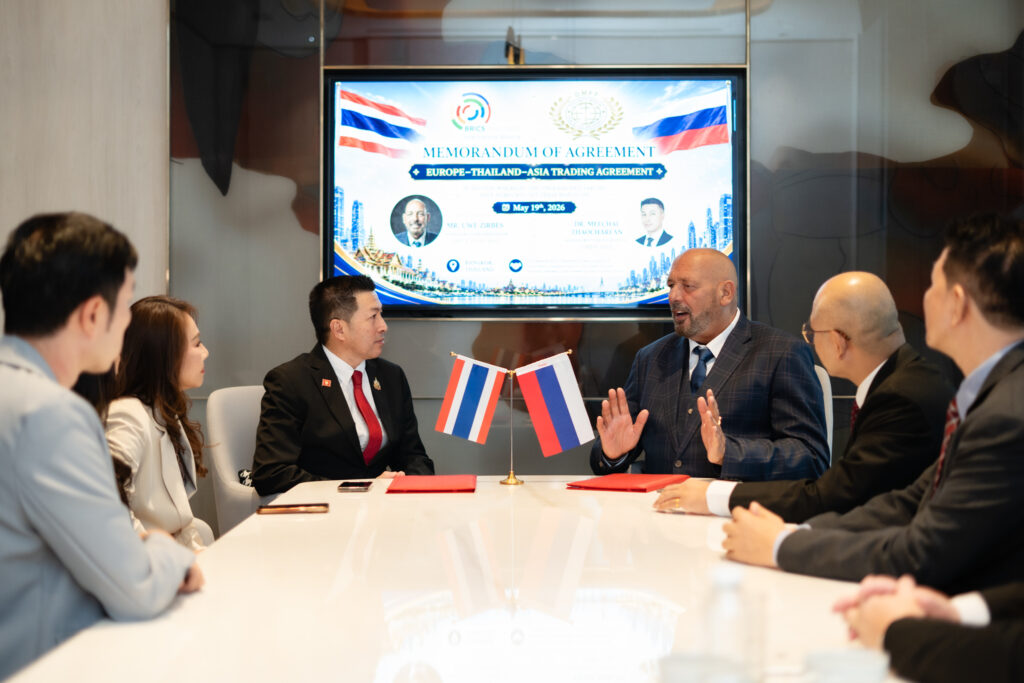
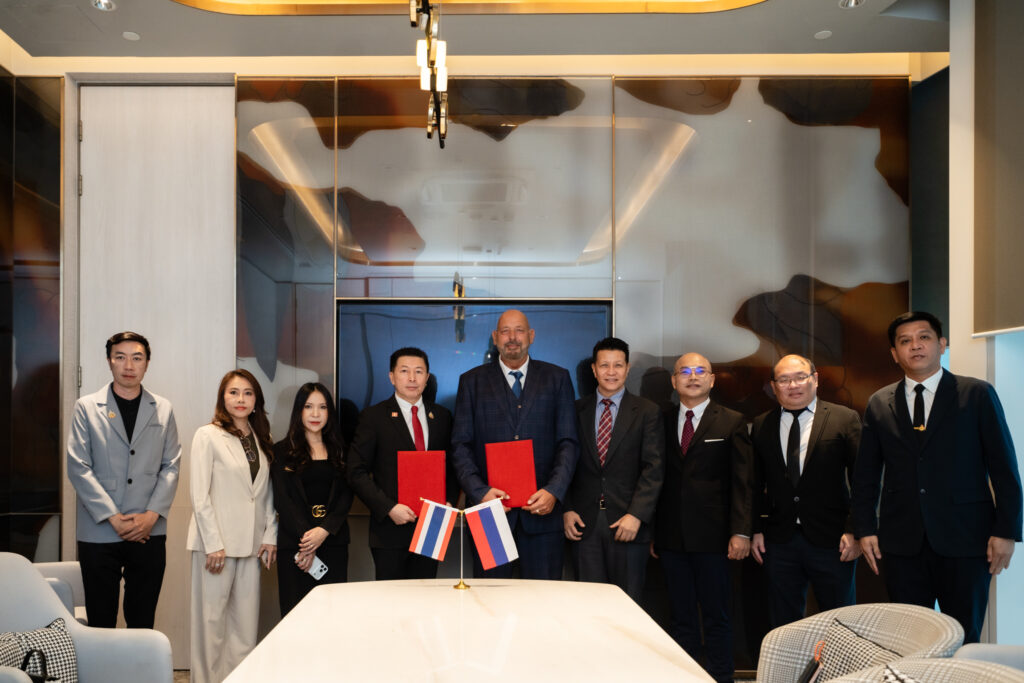
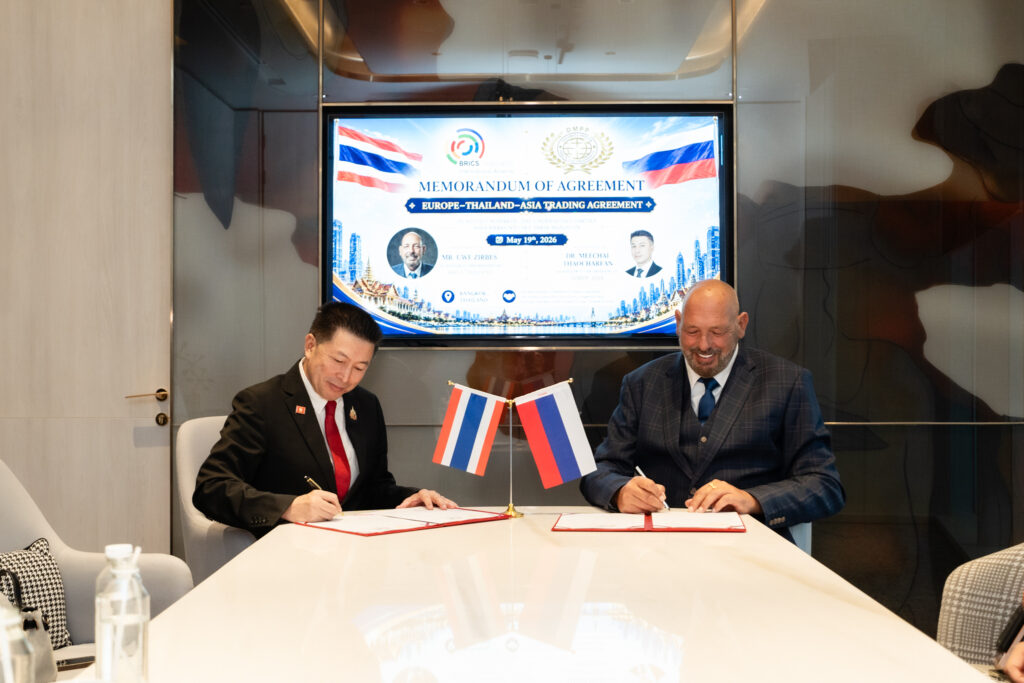
President of BRICS Thailand, Vice President and Lieutenant Governor of the (DMPP),
Dr. Meechai Thaocharean H.E. Uwe Zirbes
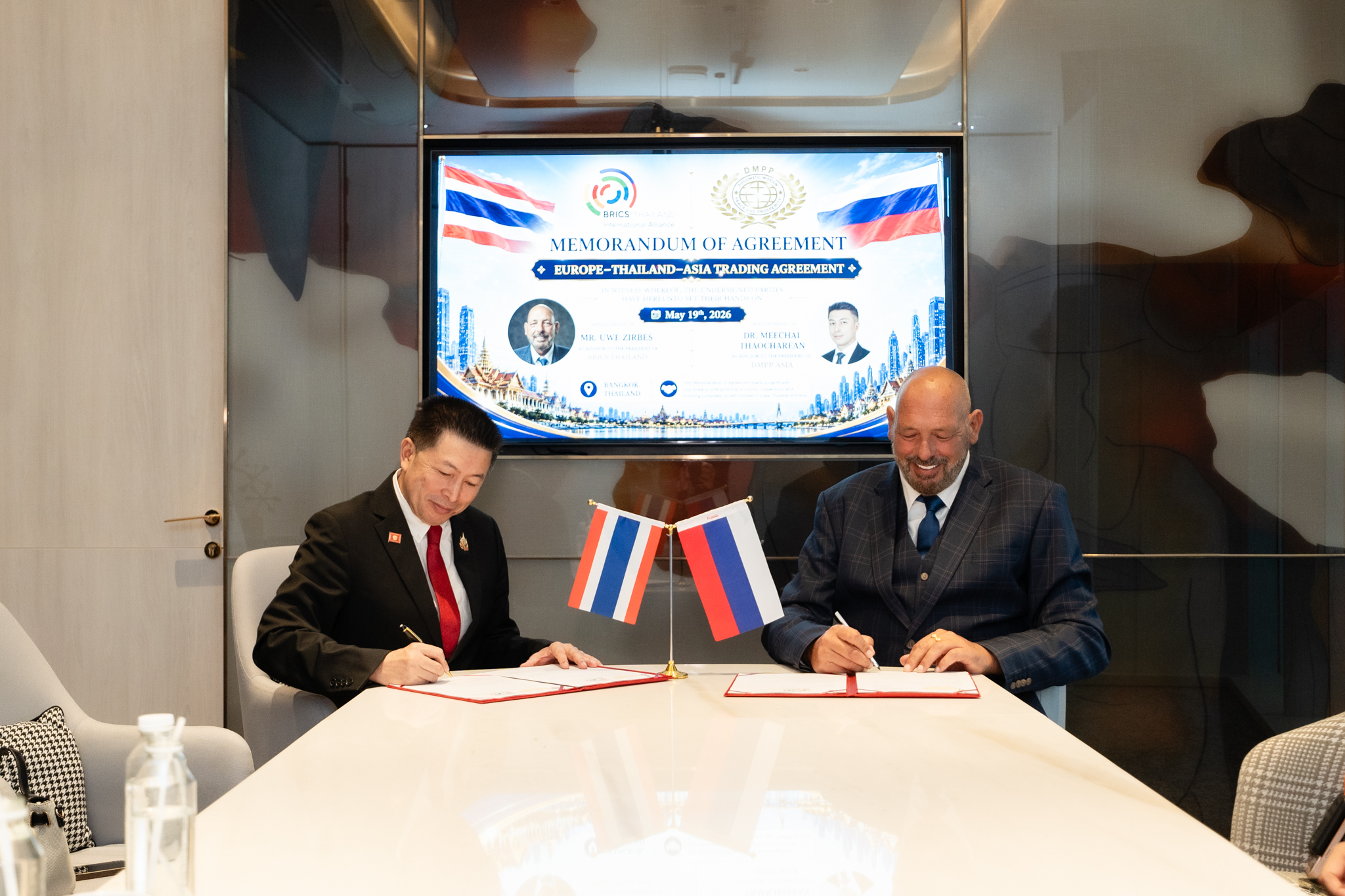
A poignant contemporary example of this paradigm shift is the recent appointment of Uwe Zirbes, Vice President and Lieutenant Governor of the Diplomatic Mission Peace and Prosperity (DMPP), as Global Senior Advisor to the President of BRICS Thailand and Special Envoy for International Strategic Alliances to BRICS.
This appointment, executed by the President of BRICS Thailand, Dr. Meechai Thaocharean, is by no means an accident of traditional diplomacy. Rather, it is the direct consequence of a strategic collaboration anchored in rigorous logic, decades of corporate-level expertise, and an expansive global network. It serves as a definitive demonstration that dedicated advocacy organizations and seasoned corporate advisors can orchestrate the exact structural outcomes that professional politics consistently fails to achieve.
I. The Credo of Practicality: Why Perseverance and Logic Transcend Politics
Uwe Zirbes is not a politician, a distinction he emphasizes with unwavering clarity. “Politicians operate within the boundaries of legislative cycles and are frequently constrained by ideological dogmas; international business professionals, conversely, are strictly results-oriented,” Zirbes observes. Approaching his 64th year, he looks back on a distinguished career governed by a central maxim: those who maintain an unshakeable belief in their objectives, analyze facts with cool objectivity, and refuse to capitulate can fundamentally alter the institutional frameworks that others deem immutable.
A sober assessment of the current geopolitical arena reveals a cautionary landscape. While Western political figures frequently engage in escalatory rhetoric, the tangible economic and human casualties of these policies remain tragically unexamined. On neither side of these conflicts are the families of the decision-makers subjected to the consequences of their decrees. All too often, partisan interests and short-term opportunism dictate state-level calcul.
 Zirbes’ operational methodology is defined by a sharp, realistic axiom: Peace and enduring prosperity are not merely moral aspirations—they must be financially viable and structurally secured. Absent a functioning infrastructure, protected investments, and sustainable growth, humanitarian objectives remain confined to the realm of theoretical rhetoric. Driven by this logical necessity, Zirbes initiated a direct strategic dialogue with Dr. Meechai Thaocharean. The objective remains unequivocally defined: to synthesize the humanitarian frameworks of the DMPP with the immense economic dynamism of the expanding BRICS architecture in a logical, pragmatic, and seamless manner.
II. The Currency of Trust: A Corporate-Level Global Matrix
The decision of the Thai BRICS leadership to entrust Uwe Zirbes with this global mandate is predicated on the highly tangible assets he commands. Within the international arena, mere expressions of intent carry no weight; the ultimate currency is direct access to institutional stakeholders. For more than three decades, Zirbes has operated as a trusted advisor to an elite global echelon:
- Institutional Financiers and Capital Allocators: Specializing in the structural engineering of large-scale Public-Private Partnerships (PPPs).
- Multinational Corporations and Industrialists: Facilitating the security of foreign direct investments (FDI) and the establishment of stable legal frameworks.
- Sovereign Wealth Funds and State-Level Decision-Makers: Acting as a highly discreet intermediary for complex, cross-border megaprojects.
His operational matrix spans seamlessly from continental Europe and the Western Balkans to Africa and the Pacific region. Zirbes’ core competence lies in his verified capacity to align disparate interest groups—who often navigate entirely different languages and institutional cultures—around a singular table, forging durable, legally unassailable compromises. On a global stage characterized by systemic volatility, he functions as a critical nexus, systematically mitigating risk and activating reliable corridors of communication.
III. The Architecture of Reciprocity: Institutional Symmetry Over Hierarchy
The mandate established between Zirbes and Dr. Thaocharean departs fundamentally from conventional, unilateral advisory agreements. It is meticulously engineered on the constitutional principle of diplomatic reciprocity. Zirbes does not assume a subordinate advisory role; instead, he establishes a strict institutional symmetry.
While Zirbes assumes his responsibilities for BRICS Thailand as a Special Envoy for Strategic Alliances, he has concurrently accredited Dr. Thaocharean as a Global Senior Advisor within the DMPP. This sophisticated framework yields immediate, actionable advantages for both institutional bodies:
1. A Strategic Nexus for Developing and Non-Aligned Nations
Zirbes possesses deep, resilient relationships within sovereign government and commercial circles throughout Africa, the Pacific, and the Balkans. Facing prolonged economic stagnation and suffocating regulatory barriers in the West—particularly within the European Union, whose structures are increasingly diagnosed by market observers as rigid and crisis-prone—many of these sovereign states are actively seeking diversification. Zirbes is uniquely positioned to guide these nations as they broaden their economic foundations, enabling them to interface efficiently with the trade and alternative financing architectures of the BRICS nations and the New Development Bank (NDB).
2. The DMPP as a Neutral Diplomatic Sanctuary
Large-scale sovereign economic initiatives frequently collapse under the weight of external political coercion. The DMPP, utilizing its extensive portfolio of international humanitarian registrations, provides a neutral, legally insulated sanctuary designed specifically to circumvent these pressures. Confidential state-level deliberations and project definitions can be coordinated entirely insulated from geopolitical interference, with Zirbes acting as the principal gatekeeper.
 Dr. Dhammarut Khiaokaeo – High Commissioner of DMPP –
3. Operational Velocity via the “Dual-Credential Strategy”
The strategic latitude to deploy either the economically fortified BRICS mandate or the humanitarian-diplomatic status of the DMPP—contingent upon the specific jurisdiction and negotiation partner—maximizes diplomatic agility. This operational flexibility drastically compresses bureaucratic friction during high-stakes Government-to-Government (G2G) transactions.
IV. Sustainable Asset Protection: The Humanitarian Shield for BRICS Leadership
The definitive hallmark of private diplomacy is that its dividends are strictly mutual. For Dr. Meechai Thaocharean and the Thai BRICS chapter, this alliance unlocks immediate integration into an internationally recognized, humanitarian network.
In the contemporary global economy, megaprojects in infrastructure and energy are no longer evaluated solely through the lens of capital expenditure; they require social, environmental, and moral legitimacy. The institutional alliance with the DMPP provides a decisive mechanism: it allows BRICS-led regional capital investments to be intrinsically paired with a verified humanitarian mandate—the systemic promotion of peace and prosperity. This structural alignment grants projects an indispensable layer of moral security on the international stage, significantly streamlining approvals from global regulatory authorities and multilateral bodies.
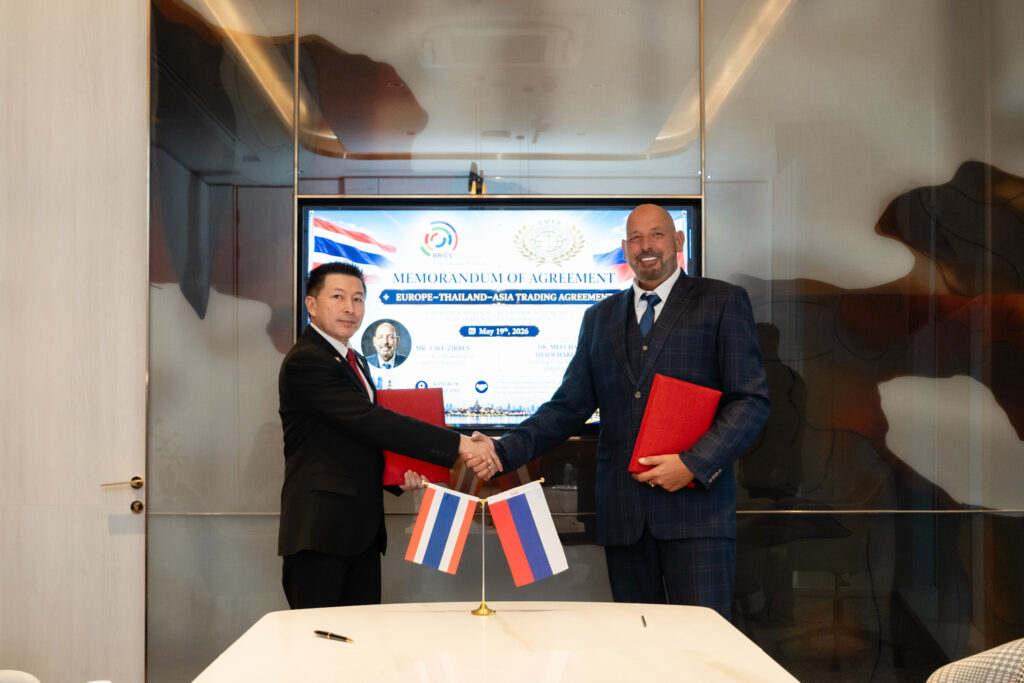
President of BRICS Thailand, Vice President and Lieutenant Governor of the (DMPP),
Dr. Meechai Thaocharean H.E. Uwe Zirbes
V. Conclusion: A Pragmatic Blueprint for the Future
The strategic trajectory of Uwe Zirbes offers a definitive blueprint for the evolution of modern international relations. The historical era in which sovereign states held an exclusive monopoly over diplomacy has drawn to a close. An international business professional who commands absolute mastery over his craft, maintains an unassailable global network, and operates with cold, logical common sense can construct more resilient bridges today than any sprawling state apparatus.
For the target corridors of the Balkans, Africa, and the Pacific, this sovereign alliance introduces a suite of pragmatic, non-aligned options—liberated from political paternalism, driven by pure economic rationale, and sustained by the unyielding conviction that absolute perseverance remains the ultimate arbiter of success.