Strategies of Security: A Guide for the World of Tomorrow
Strategies of Security: A Guide for the World of Tomorrow
In an era where global power shifts are moving drastically, more and more people are asking the question: Where is one still safe when the old certainties break down? While the Western narrative often emphasizes the dominance of the USA, the reality in 2026 points toward a “multi-block scenario.”
For emigrants who wish to avoid military conflicts and the presence of US bases or NATO structures, a new map of security is emerging. This article analyzes three different approaches to escaping the coming “storm”: flight into geopolitical depth, protection through economic relevance, or security through strategic insignificance.
Bastions of Neutrality and Distance
The Classics in Europe: Switzerland and Austria
Switzerland remains the global symbol of armed neutrality. Without NATO membership and without foreign troop bases, it offers protection through its topography and its deep roots in the international financial system. Austria follows a similar path; its constitutionally anchored neutrality prohibits the stationing of foreign bases and makes the country a diplomatic bridge-builder that consistently stays out of military alliances.
Latin America: The Zone of Peace
Uruguay has established itself as the most stable country in South America. With a deep democratic tradition and a clear rejection of foreign military presence, it offers a high quality of life far from major lines of conflict. Bolivia goes a step further, maintaining a decidedly distant stance toward US foreign policy, which excludes any form of bases on its soil. Costa Rica chooses the most radical path: it has had no military since 1948, making the country almost irrelevant as a target for military first strikes.
Asia and Oceania: Geographical Isolation
Vietnam pursues a strict “Four Noes” policy: no military alliances, no foreign bases, no siding with one country against another, and no force in international relations. This makes it a stable anchor in a restless region. Mongolia, nestled between Russia and China, utilizes its location for a clever policy of neutrality. For those seeking maximum distance, Vanuatu remains: an island paradise in the Pacific that hosts no US infrastructure and is geographically so isolated that it remains untouched by global frontlines.
The Geopolitics of “Inviolability”
The UAE (Dubai, Abu Dhabi, RAK): The World’s Depository
The United Arab Emirates has developed a mastery of dancing between blocks. As a BRICS member and a simultaneous partner of the West, they have become the world’s vault. The logic is simple: since almost every major power has parked its capital in Dubai or Abu Dhabi, an attack on these cities would be an act of economic self-mutilation. Especially Ras Al Khaimah (RAK) offers a quieter, strategically clever alternative.
Singapore: The Toll Station of the Global Economy
Singapore is located at the Strait of Malacca, through which a majority of world trade and almost all of China’s energy supply flows. No one wages war against their own supply line. The city is protected by its economic indispensability – an attack here would cause the global economy to collapse within days.
Russia and China: The Hinterland of the New Powers
Those convinced that the USA would be inferior in a conflict against the East seek safety in the hinterland of the winners. Kazan in Russia, as a “BRICS hub,” offers security far from European borders. Chengdu in the heart of China is protected by mountain ranges and serves as a technological powerhouse that is self-sufficient enough to survive global crises.
Argentina: The Fortress of Self-Sufficiency
Argentina is geopolitically one of the most interesting countries for crisis scenarios. It possesses enormous geographical depth and is one of the few countries in the world that could exist completely autarkically in an emergency. With vast agricultural land and significant shale gas reserves (Vaca Muerta), the supply of food and energy is secured. Since it hosts no permanent US combat bases and is far from the potential battlefields of the Northern Hemisphere, it offers a natural sanctuary.
Namibia: The Stable Pole in Africa
Namibia is considered one of the safest and most politically stable countries in Africa. It pursues a strict policy of non-alignment and hosts no US military bases. For emigrants, it is particularly attractive due to its low population density and its wealth of resources (uranium, diamonds, and increasingly green hydrogen), making it a partner that no one would lightly want to make an enemy of.
Malaysia: The Heart of the Non-Aligned Movement
Malaysia is a prime example of a country that refuses to take sides. As a leading member of the Non-Aligned Movement (NAM), it maintains excellent trade relations with China without burning bridges to the West, yet strictly rejects US bases on its own soil. With the “Malaysia My Second Home” (MM2H) program, it provides a legal basis for people seeking political stability in a neutral environment.
Serbia: Europe’s Unyielding Outsider
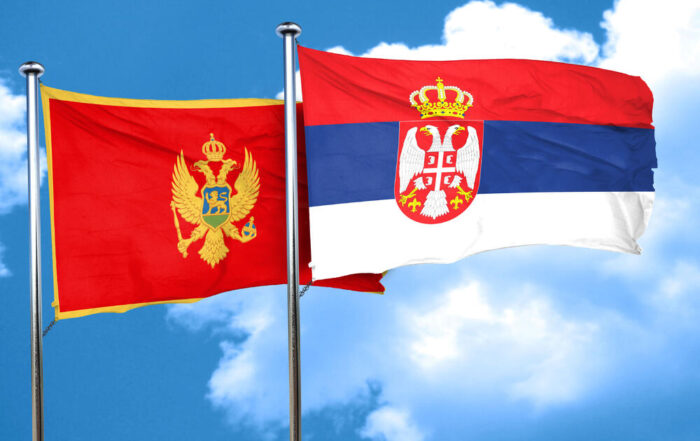
Serbia occupies a special role in Europe. It is not a NATO member and categorically rejects the stationing of US bases (with the exception of the internationally disputed Camp Bondsteel in Kosovo). The Serbian leadership maintains close military and economic ties with Russia and China.
Montenegro: Protection through Strategic Insignificance
Montenegro presents a unique case. Although it became a NATO member in 2017, its “shield” lies in its lack of strategic industry or vital mineral resources. It is primarily a land of nature and coastline with a small population. From a pragmatic military perspective, it offers no significant targets, making it a potential “ignored” zone in a global conflict. Furthermore, it offers a very low cost of living and close proximity to neutral Serbia.
Final Comparison Table
| Country / Region | Primary Strategy | NATO / US Bases | Key Protection Factor |
| Switzerland | Armed Neutrality | No / None | Alpine fortress & financial hub |
| Austria | Const. Neutrality | No / None | Diplomatic bridge-builder |
| Uruguay | Political Stability | No / None | Democratic tradition; no conflicts |
| Argentina | Resource Autarky | No / None | Food & Energy self-sufficiency |
| Namibia | Non-Alignment | No / None | Geographical vastness & resources |
| Malaysia | Diplomatic Balance | No / None | Modern infra; Non-Aligned Movement |
| UAE (Dubai/RAK) | Economic Hostage | No / Coop | BRICS member; Global wealth vault |
| Singapore | Logistical Hostage | No / Support | Control of global trade routes |
| Vanuatu | Isolation | No / None | Extreme distance from conflict zones |
| Serbia | Political Resistance | No / None | Strong ties to the East (RU/CN) |
| Kazan (RU) | Geopolitical Depth | No / None | Hinterland of a new superpower |
| Chengdu (CN) | Geopolitical Depth | No / None | Mountain protection; High-tech hub |
| Montenegro | Insignificance | Yes (Member) | No strategic targets or industry |
Conclusion: Choosing the right location depends on personal conviction. Does one rely on the moral strength of neutrality (Switzerland), on geographical escape (Vanuatu), on economic indispensability (UAE/Singapore), or on the protection afforded by strategic insignificance (Montenegro)?
In a networked world, absolute security is an illusion, but through smart positioning, the risk of “collateral damage” in the global power game can be minimized.
We’ve helped hundreds of people move their businesses overseas, legally reduce their taxes, and become dual citizens. We are focused on high-net-worth individuals and their families as well as corporations wishing to invest their offshore companies or even secure their wealth in offshore financial centers around the world. We will help you to find the best solution for setting up an offshore or onshore company. Another special area of our full-service consulting is the investment opportunity and solution in Europe, especially in the Balkans, Africa, Asia, UAE, the Caribbean and the Pacific.
If you are looking for it, please feel free to contact us. We create a holistic plan that serves your purpose.
GCI UNIT Worldwide, designs and implements customized, holistic strategies for successful investors and entrepreneurs to legally reduce their tax bills, diversify and protect their wealth, invest abroad, gain a second citizenship and live a freer life worldwide to lead.
YOUR CHANCE FOR A BETTER LIVE
GCI Unit Worldwide firm is a professional International Business Investment and Advisory Firm for Foreign Economic Relations. Our range of services includes:
• Offshore and Onshore Company Formation,
• Assets Protection and Investments
• international Business & Management
• Citizenship & Residency
• Advisory for Foreign Economic Relationship PPP Model
• Diplomatic Consultancy & Public Affairs
If you would like to discuss your internationalization and diversification plans, book a consulting session* or email us under: [email protected]
*A counseling session is a conversation about your portfolio and goals. It does not constitute legal, financial, tax or investment advice.
Department GCI Unit worldwide
by TCME Worldwide Group – Global Investments –
Level 33, Ilham Tower, 8 Jalan Binjai,
Kuala Lumpur 50450, Malaysia
www.tcme.company
www.citizenship-news.com
+382 69 150 130 Montenegro WhatsApp
+66 99091 8357 Worldwide Telegram/Viber/Signal/LINE
Email: [email protected]