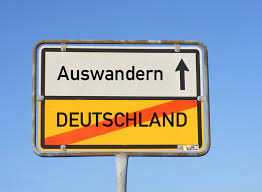
Two years ago, this sentence would have been unthinkable.
Two years ago, this sentence would have been unthinkable.
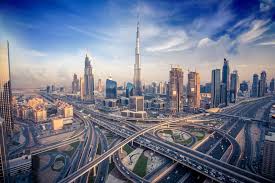
Today, it appears as the headline in Wirtschaftswoche: “Bye-bye Dubai.”
The war with Iran has damaged the emirate’s image as a safe haven for international capital.
Iranian drones have struck landmarks such as the Fairmont The Palm hotel, and a fire at the Burj Al Arab, according to research by Bellingcat, spread across approximately eight floors.
As of April 9, 2026, Emirati air defenses had intercepted 537 ballistic missiles, 2,256 drones, and 26 cruise missiles.
The Dubai Financial Market has lost around 16 percent since the start of the war, and the stock markets in Dubai and Abu Dhabi together have lost around US$120 billion in market capitalization.
The super-rich are reacting with a trend that has been visible in the industry for weeks: they are looking at alternatives.
Suddenly, locations that no one had on their radar two years ago are becoming attractive.
This movement reveals less about Dubai itself than about what location strategy truly means.
In the public perception, relocating is often seen as a one-time decision. You emigrate, establish a company, change your residence, and consider the matter closed.
Anyone who thought this way in recent years and concentrated their capital in Dubai now finds themselves in a situation they couldn’t have imagined two years ago.
This is precisely where the real lesson of the current situation lies.
We are therefore observing a different logic among our clients:
The trend is moving away from a single location towards diversified structures.
Operational business, assets, residence, and emergency reserves are deliberately distributed across multiple jurisdictions so that no single event can destabilize the entire structure.
This is the reality in which every wealthy family business owner who has seriously considered their organizational structure operates today.
Which countries are suitable depends entirely on the individual case.
Business model and life planning are just as crucial as the current tax situation and personal risk assessment.
What makes sense for an e-commerce founder in the scaling phase rarely suits a family business owner after thirty years of building a substantial business. The right answer in 2023 may already be obsolete by 2026.
What I tell my clients about this:
A good location strategy functions like a portfolio. It isn’t built once and then left untouched.
It is continuously adapted to economic, political, and geopolitical realities. The Iran-Iraq War didn’t create this necessity; it made it visible.
Anyone who examines today how to legally transfer their operations and assets into other structures is thinking ahead.
Building structures that function internationally requires lead time.
Those who wait until the next geopolitical event makes their situation obvious have often already lost the best options.
In a personal consultation, we will clarify which structures specifically fit your situation. Tailored to your business model, your life plan, and your risk assessment.
This consultation is beneficial if you, as an entrepreneur, have more complex structures and want to determine which tax optimization and location strategy are most suitable for your specific situation.
Secure your preferred appointment here – free of charge and without obligation.
Department GCI Unit worldwide
by TCME Worldwide Group – Global Investments –
Level 33, Ilham Tower, 8 Jalan Binjai,
Kuala Lumpur 50450, Malaysia
www.tcme.company
www.citizenship-news.com
+382 69 150 130 Montenegro WhatsApp
+66 99091 8357 Worldwide Telegram/Viber/Signal/LINE
Email: [email protected]
PS: Those who chose Dubai in 2023 had good reasons. Anyone developing a location strategy today should understand it as a living system – with options that can withstand a single geopolitical crisis.